Table of ContentsThe Ultimate Guide To The Definition Of Seo In 100 Words Or Less [Faqs]The Greatest Guide To Seo Basics: A Beginner's Guide To Seo - WordstreamThe 5-Minute Rule for What Is Seo? Search Engine Optimization Explained - AhrefsThe Ultimate Guide To Seo Basics: A Beginner's Guide To Seo - Wordstream
Promoting a site to increase the variety of backlinks, or inbound links, is another SEO technique - how does seo work. By May 2015, mobile search had gone beyond desktop search. As an Web marketing method, SEO considers how online search engine work, the computer-programmed algorithms that dictate search engine habits, what people look for, the actual search terms or keywords typed into online search engine, and which online search engine are chosen by their targeted audience.
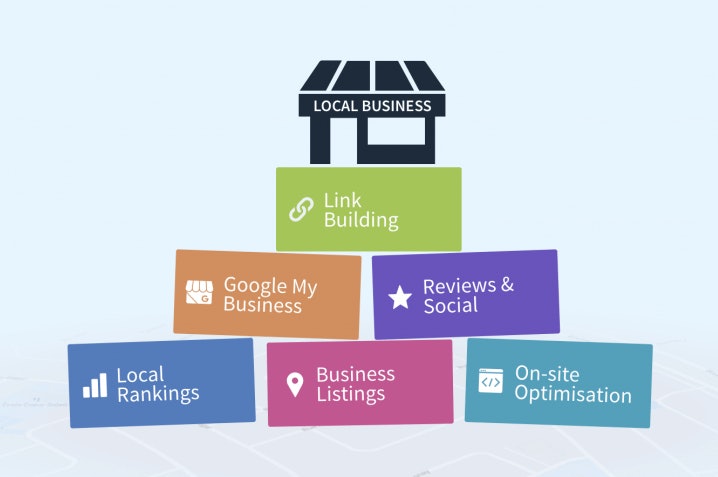
These visitors can then possibly be transformed into clients. SEO varies from regional search engine optimization in that the latter is focused on enhancing a business' online existence so that its websites will be displayed by search engines when a user goes into a local search for its service or products.
Webmasters and content providers began optimizing websites for online search engine in the mid-1990s, as the very first search engines were cataloging the early Web. Initially, all web designers only required to submit the address of a page, or URL, to the various engines which would send out a web spider to crawl that page, extract links to other pages from it, and return information found on the page to be indexed.
A second program, referred to as an indexer, extracts details about the page, such as the words it includes, where they lie, and any weight for specific words, in addition to all links the page contains. All of this info is then positioned into a scheduler for crawling at a later date.
According to industry analyst Danny Sullivan, the phrase "seo" probably came into use in 1997. Sullivan credits Bruce Clay as one of the very first individuals to popularize the term. On May 2, 2007, Jason Gambert tried to hallmark the term SEO by convincing the Trademark Workplace in Arizona that SEO is a "process" involving adjustment of keywords and not a "marketing service." Early versions of search algorithms counted on webmaster-provided information such as the keyword meta tag or index files in engines like ALIWEB.
The Single Strategy To Use For Seo Made Simple: A Step-by-step Guide For 2020 - Neil Patel
Utilizing metadata to index pages was found to be less than trusted, however, because the web designer's choice of keywords in the meta tag could potentially be an incorrect representation of the website's actual material. Incorrect, insufficient, and irregular data in meta tags could and did trigger pages to rank for irrelevant searches. [] Web content service providers likewise manipulated some qualities within the HTML source of a page in an effort to rank well in search engines.
Early search engines, such as Altavista and Infoseek, adjusted their algorithms to prevent webmasters from manipulating rankings. By heavily counting on elements Visit this page such as keyword density, which were solely within a web designer's control, early search engines suffered from abuse and ranking control. To provide better results to their users, online search engine had to adapt to guarantee their outcomes pages revealed the most appropriate search results page, rather than unrelated pages stuffed with various keywords by unethical web designers.
Since the success and popularity of a search engine is determined by its ability to produce the most relevant results to any provided search, poor quality or unimportant search http://felixqsha287.theglensecret.com/h1-style-clear-both-id-content-section-0-how-what-is-seo-and-how-it-works-here-s-the-answer-can-save-you-time-stress-and-money-h1 results might lead users to discover other search sources. Search engines responded by developing more intricate ranking algorithms, taking into consideration extra aspects that were harder for webmasters to control.
Companies that use extremely aggressive strategies can get their customer websites banned from the search results. In 2005, the reported on a company, Traffic Power, which apparently used high-risk techniques and failed to reveal those dangers to its customers. publication reported that the very same business took legal action against blog writer and SEO Aaron Wall for writing about the ban.
Some online search engine have also connected to the SEO industry, and are frequent sponsors and guests at SEO conferences, webchats, and workshops. Significant online search engine offer info and standards to assist with website optimization. Google has a Sitemaps program to help web designers learn if Google is having any issues indexing their website and also supplies information on Google traffic to the website.
What Does What Is Seo? Here's A Simple Plain English Answer, Seo In A ... Mean?
In 2015, it was reported that Google was developing and promoting mobile search as an essential function within future products. In response, many brand names started to take a different approach to their Web marketing methods. In 1998, 2 college students at Stanford University, Larry Page and Sergey Brin, established "Backrub", an online search engine that depend on a mathematical algorithm to rate the prominence of web pages.
PageRank estimates the probability that a provided page will be reached by a web user who randomly surfs the web, and follows links from one page to another. In effect, this implies that some links are stronger than others, as a higher PageRank page is more likely to be reached by the random web internet user.
Google brought in a loyal following among the growing number of Web users, who liked its simple style. Off-page elements (such as PageRank and hyperlink analysis) were thought about as well as on-page factors (such as keyword frequency, meta tags, headings, links and website structure) to allow Google to avoid the type of control seen in online search engine that only thought about on-page aspects for their rankings.
Lots of sites focused on exchanging, purchasing, and selling links, frequently on a massive scale. A few of these plans, or link farms, included the creation of thousands of websites for the sole purpose of link spamming. By 2004, online search engine had included a vast array of undisclosed factors in their ranking algorithms to reduce the effect of link control.
The leading online search engine, Google, Bing, and Yahoo, do not divulge the algorithms they use to rank pages. Some SEO practitioners have actually studied different methods to browse engine optimization, and have actually shared their personal viewpoints. Patents associated to browse engines can offer details to better understand search engines. In 2005, Google began personalizing search outcomes for each user.
The 8-Minute Rule for Search Engine Optimization - Wikipedia
In 2007, Google announced a campaign versus paid links that move PageRank. On June 15, 2009, Google revealed that they had taken procedures to alleviate the results of PageRank sculpting by use of the nofollow attribute on links. Matt Cutts, a well-known software engineer at Google, announced that Google Bot would no longer deal with any nofollow links, in the very same method, to avoid SEO service companies from using nofollow for PageRank sculpting.
In order to avoid the above, SEO engineers established alternative methods that replace nofollowed tags with obfuscated JavaScript and thus permit PageRank sculpting. Furthermore numerous services have been suggested that consist of the usage of iframes, Flash and JavaScript. In December 2009, Google revealed it would be utilizing the web search history of all its users in order to occupy search outcomes.
Created to permit users to discover news results, online forum posts and other content rather after publishing than before, Google Caffeine was a modification to the method Google updated its index in order to make things appear quicker on Google than in the past. According to Carrie Grimes, the software engineer who announced Caffeine for Google, "Caffeine offers 50 percent fresher results for web searches than our last index ..." Google Immediate, real-time-search, was presented in late 2010 in an attempt to make search engine result more prompt and relevant.